EN-GUIDE-03 · VFD TRIP EVIDENCE
VFD Trip Evidence & Controlled Restart
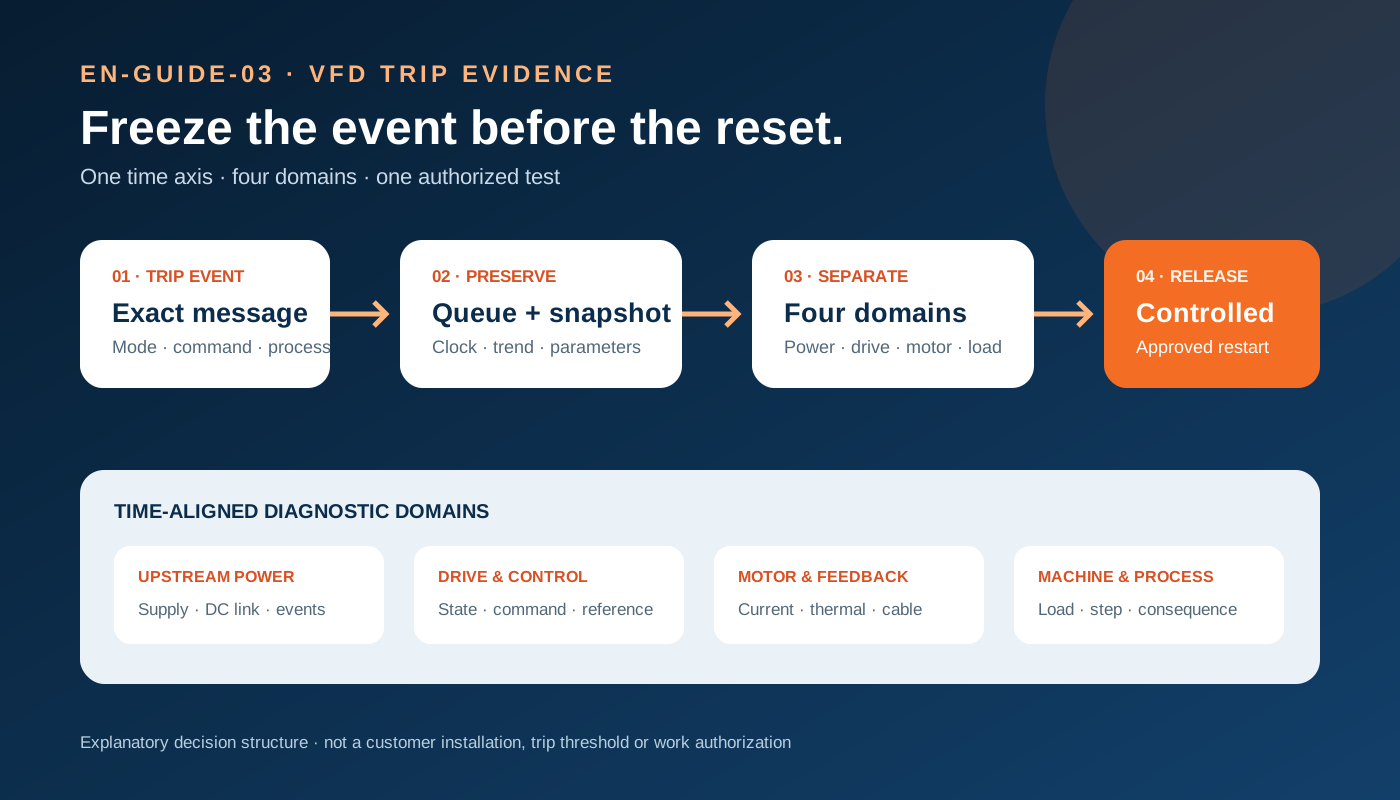
Do not make “reset and try again” the first diagnostic step. Freeze the exact trip evidence, align four system domains on one timeline, then authorize one bounded test and a monitored restart.
DECISION SUMMARY
A cleared fault is not the same as a resolved cause or an approved restart.
OBSERVABLE SYMPTOMS
Conditions that require the trip evidence to be reopened
- The same trip returns at start, acceleration, steady load, deceleration or stopping.
- The exact message and event time are missing from the operator report.
- The keypad, PLC, HMI and historian show different timestamps or event order.
- The drive is reset before its queue, snapshot, trend or parameter state is exported.
- The event follows a supply disturbance, mechanical jam, process change, motor work or download.
- Restart succeeds only after cooling, load removal or a power cycle.
STOP-WORK CONDITIONS
Hold when energy, motion, damage, fault meaning or restart authority is open.
Burning, smoke, arcing, damaged insulation, liquid ingress, severe noise or uncontrolled motion is present.
The motor, cable, machine, braking path, feedback or safety boundary cannot be identified.
A possible short, ground fault, overtemperature, internal failure or unsafe process condition has not been reviewed.
Qualification, permit, PPE, instrument rating or an approved energized-work method is absent.
DC-link energy, mechanical load, rotation, backfeed or automatic restart is not controlled.
A parameter, bypass, safety, protection or restart change lacks a baseline, rollback or authority.
DATA TO COLLECT
Build one timeline that links the drive event to the actual machine and process.
| Evidence group | Minimum record | Decision supported |
|---|---|---|
| Asset identity | Drive family/model, firmware, serial, parameter revision, motor and load identity | Confirms the exact equipment and approved baseline. |
| Fault record | Exact fault/warning text, sequence, count, occurrence time and clock-quality note | Preserves what the drive reported and in what order. |
| Stored diagnostic data | Fault/event queue, trip details, logger, trend and available pre/post-event capture | Shows the state at and around the trip. |
| Command and drive state | Run/stop source, reference, mode, direction, status, output and safety state | Separates a commanded stop from a protective trip. |
| Power domain | Supply/breaker/contactor events, DC-link or available supply values and power-quality record | Tests an upstream or common-event hypothesis. |
| Motor and load | Motor data, current/thermal state, cable/grounding, feedback, brake and mechanical condition | Separates electrical, thermal, feedback and mechanical causes. |
| Process context | Process step, product, valve/damper state, load change and simultaneous work | Links the drive event to actual operating consequence. |
| Work control | Permit, energy control, test boundary, stop limit, rollback and release authority | Connects evidence to a lawful, controlled action. |
DECISION GATES
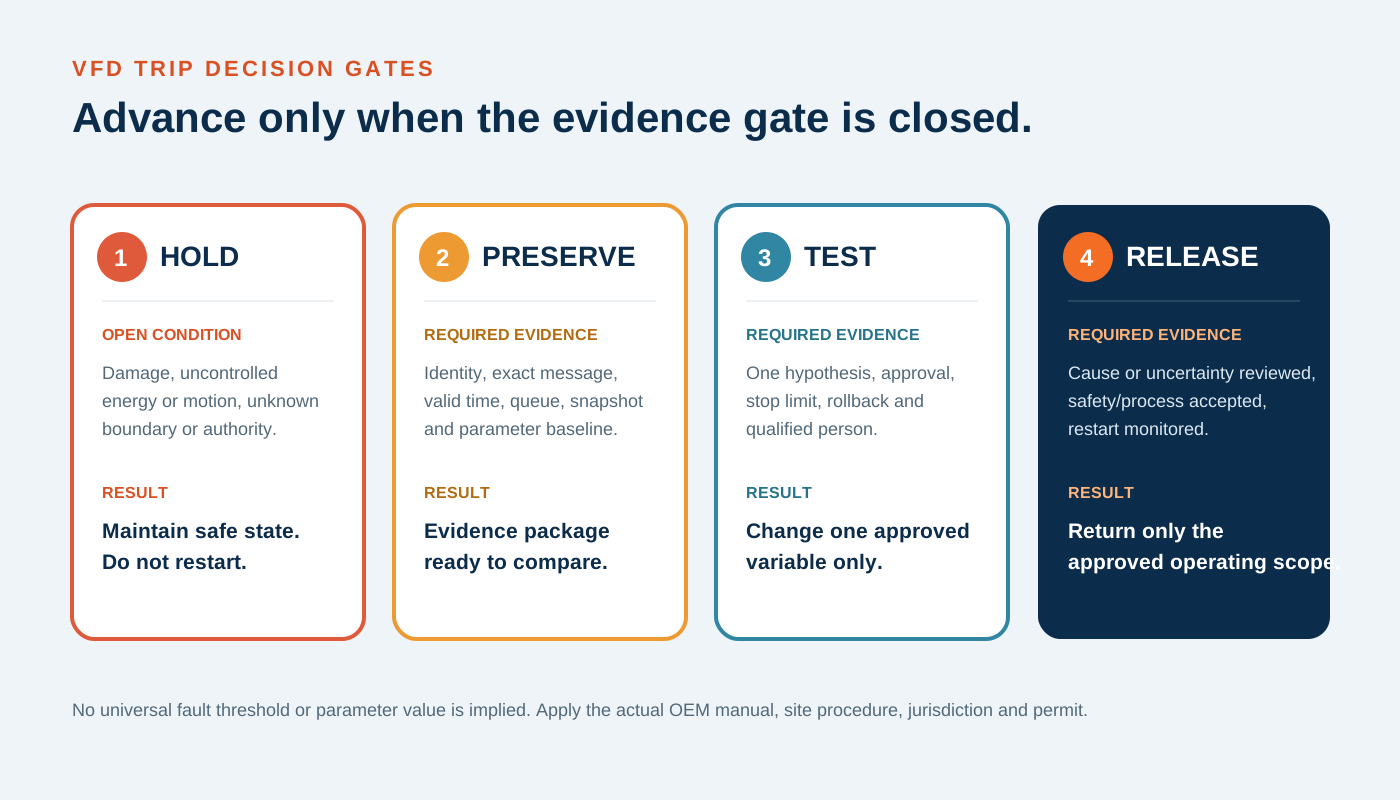
Close the evidence gate before the next action advances.
| Gate | Required evidence | Result |
|---|---|---|
| Hold | Damage, uncontrolled energy or motion, unknown boundary, unassessed serious fault or missing authority. | Isolate or maintain safe state; do not restart. |
| Preserve | Identity, exact messages, valid time basis, queue/snapshot/trend and parameter baseline captured. | Evidence package is ready for comparison. |
| Controlled test | One hypothesis, approved method, stop/rollback, qualified person and process acceptance. | Test one variable without erasing the baseline. |
| Release | Cause or uncertainty reviewed, safety/process accepted, restart monitored and as-left record complete. | Return only the approved operating scope. |
SIX-STEP PROCEDURE
Move from an unedited event record to an authorized final state.
- 01Fix the event and system boundary.
Identify the drive, motor, load, process state, control source, safety function, affected area and decision authority.
- 02Freeze as-found evidence.
Capture the display, exact message, queue, timestamp quality, stored trip details, trends and parameter revision before reset or power cycle.
- 03Separate the four domains.
Compare upstream power/DC link, drive/control, motor/cable/feedback and mechanical/process evidence on one time axis.
- 04Define one controlled test.
State the hypothesis, unchanged baseline, test point, expected observation, stop condition, rollback and qualified approver.
- 05Perform an authorized low-consequence test.
Change one approved variable only; record command, response, electrical/mechanical values and process outcome.
- 06Release through a controlled restart.
Confirm safe state, personnel clearance, safety functions, load readiness and monitoring; issue the as-left record or return to hold.
EXPERT REVIEW
Questions for the responsible drive and process specialists
- Does the event time align with the PLC, HMI, historian, power monitor and process record?
- Which saved values are captured by this exact drive family and firmware at the trip?
- Is the fault primary, or a consequence of supply, motor, feedback, braking, load or process behavior?
- Would the proposed reset, parameter change or power cycle destroy evidence or change a safety function?
- What is the lowest-consequence approved test that can distinguish the leading hypotheses?
- Which uncertainty remains, and what operating restriction is required after restart?
HANDOVER PACKAGE
Leave enough evidence for the next engineer to reproduce the decision.
- Event ID, UTC/local basis and clock-quality note
- Drive/motor/load identity and system-boundary diagram
- Unedited queue, snapshot, trend and original export files
- Parameter backup, comparison and change approval
- Power, command, drive, motor and process evidence on one timeline
- Test plan, stop condition, result, non-result and rollback
- Restart authorization, monitored run and as-left state
- Residual uncertainty, restriction, owner and next review
OFFICIAL PRIMARY SOURCES
Use the actual OEM manual and local requirements as the acceptance basis.
- Schneider Electric — Altivar 600/900/340 Error History and saved details
- Schneider Electric — Altivar Process diagnostic data around errors and warnings
- Rockwell Automation — PowerFlex 750-Series Programming Manual
- OSHA — 29 CFR 1910.333, Selection and Use of Work Practices
Manufacturer diagnostic functions are product-family and firmware specific. OSHA requirements cited here are United States requirements. Confirm the country, authority having jurisdiction, site energy-control program, work permit, qualified-person rules, actual OEM manual and responsible engineer/process owner approval. Do not energize, bypass, defeat an interlock or change protection based only on this guide.