EN-GUIDE-06 · SEMICONDUCTOR FAB RECOVERY
Semiconductor Fab Outage Recovery: Area, Facility, Tool & Production Release Evidence
Restored utility power or a tool READY signal does not release a semiconductor process. Hold material first, preserve the cross-system timeline, then release area/EHS, facility and cleanroom, tool/chamber, carrier/lot and production through separate evidence gates.
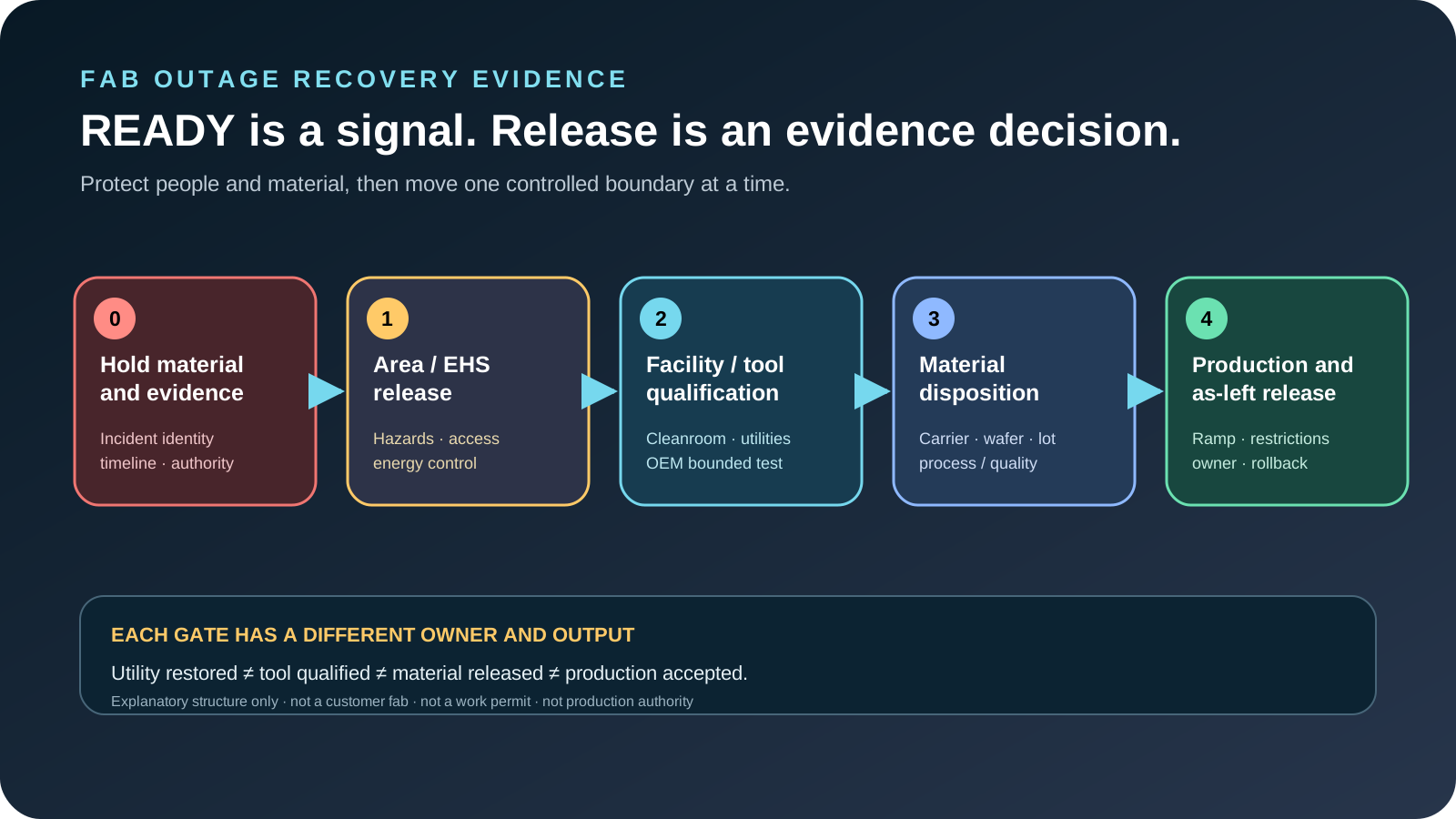
DECISION SUMMARY
READY is a signal. Release is an evidence decision.
OBSERVABLE SYMPTOMS
Conditions that reopen the recovery boundary
- Utility, FMCS or tool READY returns and production restart is requested before dependencies are reconciled.
- Electrical, cleanroom, process-utility and tool events cannot be aligned to one timeline.
- Fire, gas, chemical, exhaust, ventilation or access state remains open while equipment work begins.
- Tool, chamber, recipe, load port, carrier, wafer or lot identity is incomplete after the interruption.
- A temporary bypass, manual mode, disabled alarm or unverified utility remains in the recovery state.
- Lot disposition is inferred from tool status rather than inspection, history and named quality authority.
STOP-WORK CONDITIONS
Hold the next gate when people, energy, material or evidence is uncontrolled.
Fire, gas, chemical, exhaust, ventilation, access, permit or emergency response is open.
Source, backfeed, stored energy, automatic start, remote command or affected personnel cannot be verified.
Utility identity, quality, dependency or cleanroom condition is uncertain.
Tool, chamber, recipe, carrier, wafer, lot or partial-process state cannot be reconciled.
Original logs or material history would be overwritten, or timestamps cannot support a common sequence.
Bypass, manual mode, disabled protection, open item, rollback or authority is concealed.
Maintain area control, material hold and the approved safe state. Preserve original evidence and return the next gate to the named authority. This guide does not authorize access, hazardous-energy work, tool restart, wafer processing or production release.
DATA TO COLLECT
Make every release traceable to one event, tool and material identity.
| Evidence group | Minimum record | Decision supported |
|---|---|---|
| Incident identity | Fab, bay, tool/chamber, carrier/wafer lot, process, event window, time sources and decision owners | Fixes event and material boundary. |
| Area/EHS | Fire, gas, chemical, exhaust, ventilation, access, permit, emergency response and isolation | Supports named area/work release. |
| Electrical energy | Sources, ATS/UPS/generator, branches, protection, PQ, isolation, backfeed, stored energy and auto-start | Proves controlled energy boundaries. |
| Cleanroom/facility | FFU/MAU/exhaust, pressure, temperature, humidity, particle record and dependent systems | Defines facility service boundary. |
| Process utilities | Gas, chemical, vacuum, abatement, UPW, PCW, CDA, nitrogen and POC identity/quality | Shows exact services available. |
| Tool/chamber | OEM procedure, energy/grounding, alarms/interlocks, E-stop, chamber/recipe/load-port state, test and rollback | Supports one bounded qualification. |
| Automation/material | FMCS/BMS/host/MES/AMHS/OHT/stocker/FOUP, carrier map, lot hold, recipe step and partial process | Preserves material identity. |
| Qualification/result | Approved initial state, test material, expected/actual response, stop/rollback and witness records | Separates qualification from production. |
| As-left/release | Final settings, bypasses, restrictions, lot disposition, staged ramp, monitoring, owner and acceptance | Defines state actually released. |
FIVE RELEASE GATES
Never collapse five decisions into one READY signal.
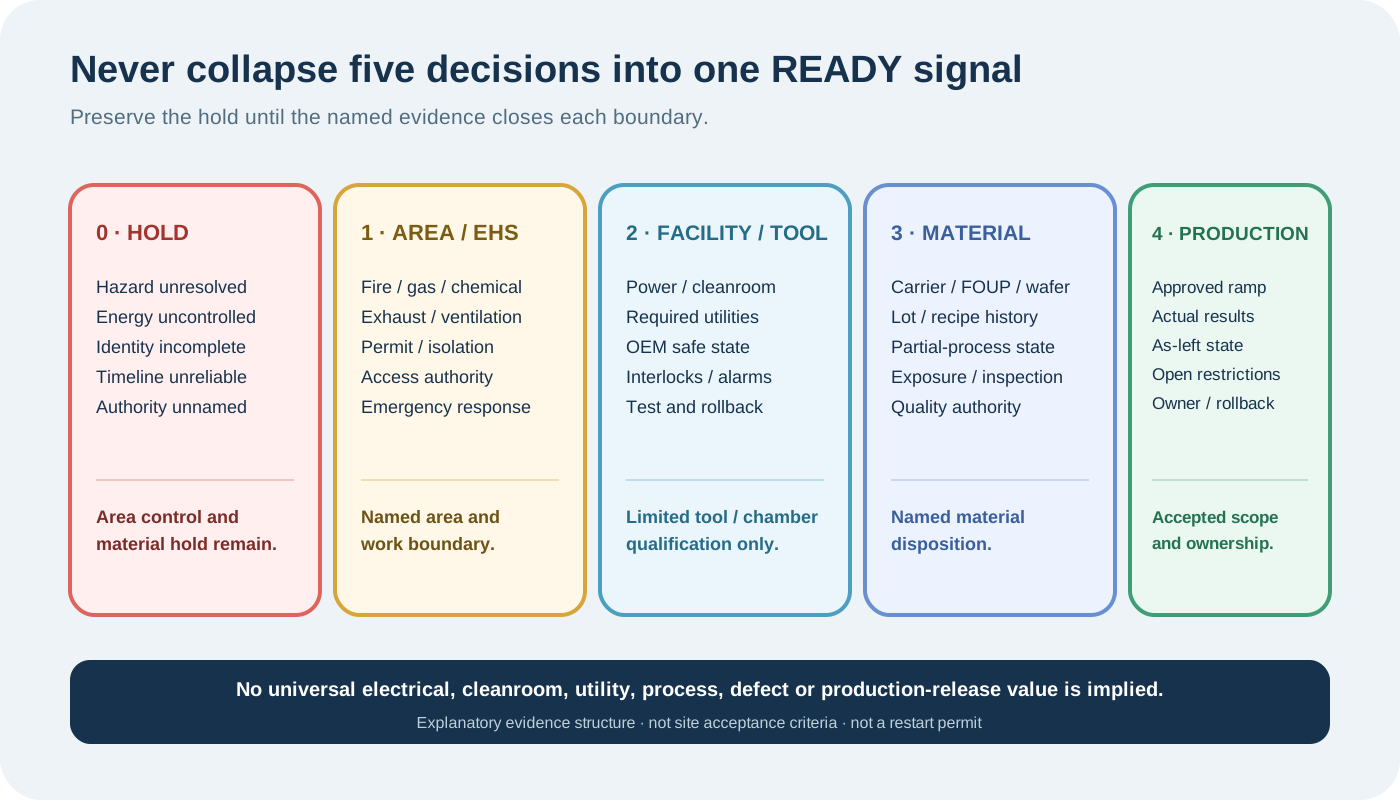
| Gate | Required evidence | Output |
|---|---|---|
| Hold | Uncontrolled hazard, energy, material identity, timeline or authority. | Area control and material hold remain. |
| Area/EHS release | Hazard inventory, emergency/fire/gas/chemical/exhaust state, permits, isolation and access authority. | Named area and work boundary. |
| Facility/tool qualification | Electrical/facility stability, required utilities, OEM safe state, interlocks, bounded test and rollback. | Limited tool/chamber qualification. |
| Material disposition | Carrier/FOUP/wafer/lot/recipe history, exposure review, inspection and quality authority. | Named material decision. |
| Production/as-left | Approved ramp, actual results, restored configuration, residual limits, monitoring, rollback and sign-off. | Accepted scope and ownership. |
SEVEN-STEP RECOVERY PROCEDURE
Protect material first, then prove each boundary.
- Establish incident command and material hold.
Name the event, affected area, systems, tools, carriers/lots and gate owners.
- Freeze original cross-system evidence.
Preserve PQ, protection, FMCS/BMS, tool, host/MES, AMHS and facility records with time-quality notes.
- Release the area and control hazardous energy.
Close fire, gas, chemical, exhaust, access, permits, isolation, backfeed, stored energy and emergency response.
- Prove facility and cleanroom readiness.
Reconcile electrical sources, conditions, process utilities, dependencies, physical observations and alarms.
- Qualify the exact tool and chamber.
Apply OEM procedure, prove POCs/interlocks, use approved test material and demonstrate rollback.
- Disposition carrier, wafer and lot.
Reconcile MES/host/AMHS identity, recipe and partial-process history, exposure/inspection and quality decision.
- Stage production and hand over as-left.
Verify ramp results, disclose bypasses/open items and preserve rollback, monitoring, final configuration and sign-off.
EXPERT REVIEW
Questions before qualification becomes release
- Is the site working with one event, tool, material and time identity?
- Have area/EHS and hazardous-energy decisions been made by the proper authorities?
- Are facility and utility states physically verified for the exact tool state?
- Does limited qualification use approved conditions and material without silently becoming production?
- Is material disposition independent of a generic tool READY state?
- Are residual restrictions, bypasses, monitoring and rollback visible to the accepting owner?
AS-LEFT HANDOVER
Transfer the actual operating and material state.
Incident authority, area/work release, permits, protection/PQ timeline and hazardous-energy verification.
Cleanroom, utilities, dependencies, POCs, interlocks and tool/chamber as-found/as-left state.
Host/MES/AMHS/carrier/wafer/lot identity, disposition, qualification plan and results.
Final settings, bypasses, open items, restrictions, monitoring, ramp, rollback and signatures.
The PDF preserves the gates, evidence table, procedure, sources and application limits.
OFFICIAL PRIMARY SOURCES
Use each source only within its published scope and jurisdiction.
- SEMI S2-0724E — performance-based EHS considerations for semiconductor manufacturing equipment
- ISO 14644-4:2022 — cleanroom design, construction, start-up and verification framework
- NFPA 318:2025 — Standard for the Protection of Semiconductor Fabrication Facilities
- OSHA 29 CFR 1910.147 — U.S. control of hazardous energy
- OSHA 29 CFR 1910.333 — U.S. electrical work practices
SEMI S2 is a performance-based EHS guideline and leaves applicable safety practices and regulatory limitations to users. ISO 14644-4 covers cleanroom creation, start-up and verification but excludes specific process equipment, fire/safety regulation and ongoing operation. NFPA and OSHA sources describe United States code or workplace requirements. Confirm current purchased standards, country, AHJ, permits, chemistry, exact equipment/OEM criteria, qualified personnel and production/quality authority.
RELATED SCOPE