EN-GUIDE-05 · BESS COMMISSIONING EVIDENCE
BESS Commissioning Test Readiness, Integrated Scenarios & As-left Handover
Installed equipment and isolated subsystem passes do not prove readiness for an integrated test or operational release. Reconcile the approved design and active configuration, prove safe test readiness, execute one bounded scenario at a time, demonstrate recovery or rollback, and hand over the accepted as-left state.
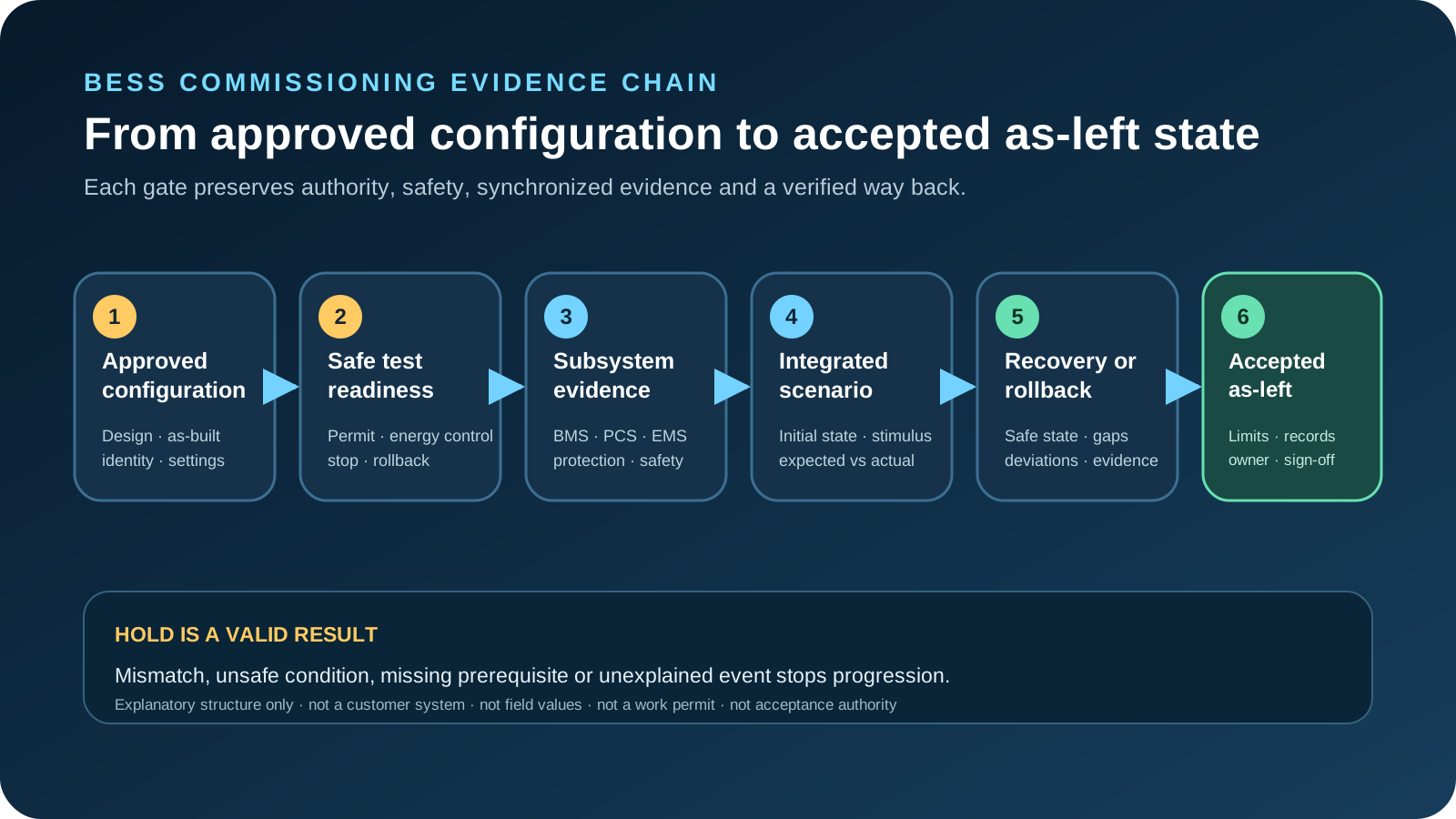
DECISION SUMMARY
A commissioned subsystem is not an accepted integrated BESS.
OBSERVABLE SYMPTOMS
Conditions that reopen commissioning readiness
- Equipment is installed, but approved design, as-built drawings and active settings do not reconcile.
- BMS, PCS, EMS, SCADA, protection, HVAC and fire systems pass separately while integrated transitions remain unproven.
- The test plan says “normal operation” without an initial state, stimulus, expected response, stop condition, rollback or required record.
- Emergency shutdown, auxiliary loss, communication loss or protection-trip paths have not been observed end to end.
- Alarms, events and physical indications disagree in time or sequence.
- Open punch-list items, temporary bypasses, unvalidated changes or operating limits are hidden at release.
STOP-WORK CONDITIONS
Hold when the system, safety boundary, prerequisite or event record is not trustworthy.
Approved design, as-built identity or active configuration does not match the equipment under test.
Damage, abnormal heat, smoke, off-gas, fire, water, contamination or another unsafe condition is present.
Isolation, stored energy, LOTO, fire/emergency response, exclusion zones or AHJ boundary is open.
Protection, interlock, emergency shutdown, fire detection, ventilation, auxiliary power or rollback is not verified.
Prerequisites, expected response, stop criteria, witness, record or recovery plan is missing.
An alarm, event gap, time mismatch or unstable state remains unexplained.
Maintain or restore the approved safe state, preserve the as-found evidence and return the decision to the named authority. This guide does not authorize energization, charge/discharge, bypass, emergency response, restart or acceptance.
DATA TO COLLECT
Make every scenario traceable to an approved system and a recoverable state.
| Evidence group | Minimum record | Decision supported |
|---|---|---|
| Authority and boundary | Country, AHJ, utility/interconnection, site permit, owner/EPC/OEM roles, witnesses and release owner | Fixes who may approve each gate. |
| Approved design | Single-line, network, protection, control, fire/safety and emergency-response documents with revision | Establishes the accepted design basis. |
| Active configuration | Battery/rack/BMS, PCS, transformer/switchgear/protection, EMS/SCADA, HVAC, fire, auxiliaries and communications identity/settings | Reconciles the system actually under test. |
| Installation readiness | Inspection, terminations, labeling, grounding, barriers, housekeeping, pre-energization and unresolved defects | Prevents testing on an incomplete installation. |
| Test safety | Energy-control plan, permits, safe initial state, instruments/calibration, communications, exclusion zones and emergency response | Proves the test can be started and stopped safely. |
| Subsystem evidence | Approved results for battery/BMS, PCS, protection, EMS/SCADA, HVAC, fire, auxiliary/DC/UPS and communications | Shows each prerequisite function is available. |
| Scenario contract | Initial state, stimulus, expected sequence, observation points, stop criteria, rollback, witnesses and record format | Makes one integrated test bounded and repeatable. |
| Event evidence | Synchronized alarms, SOE/events, physical indications, commands/results, protection records and witness notes | Tests the integrated response on one timeline. |
| As-left handover | Final settings/backups/drawings, temporary states, open items, limits, training, warranty/OEM actions and acceptance | Defines the operating state actually released. |
DECISION GATES
Advance on complete evidence—not schedule pressure or a cleared alarm.
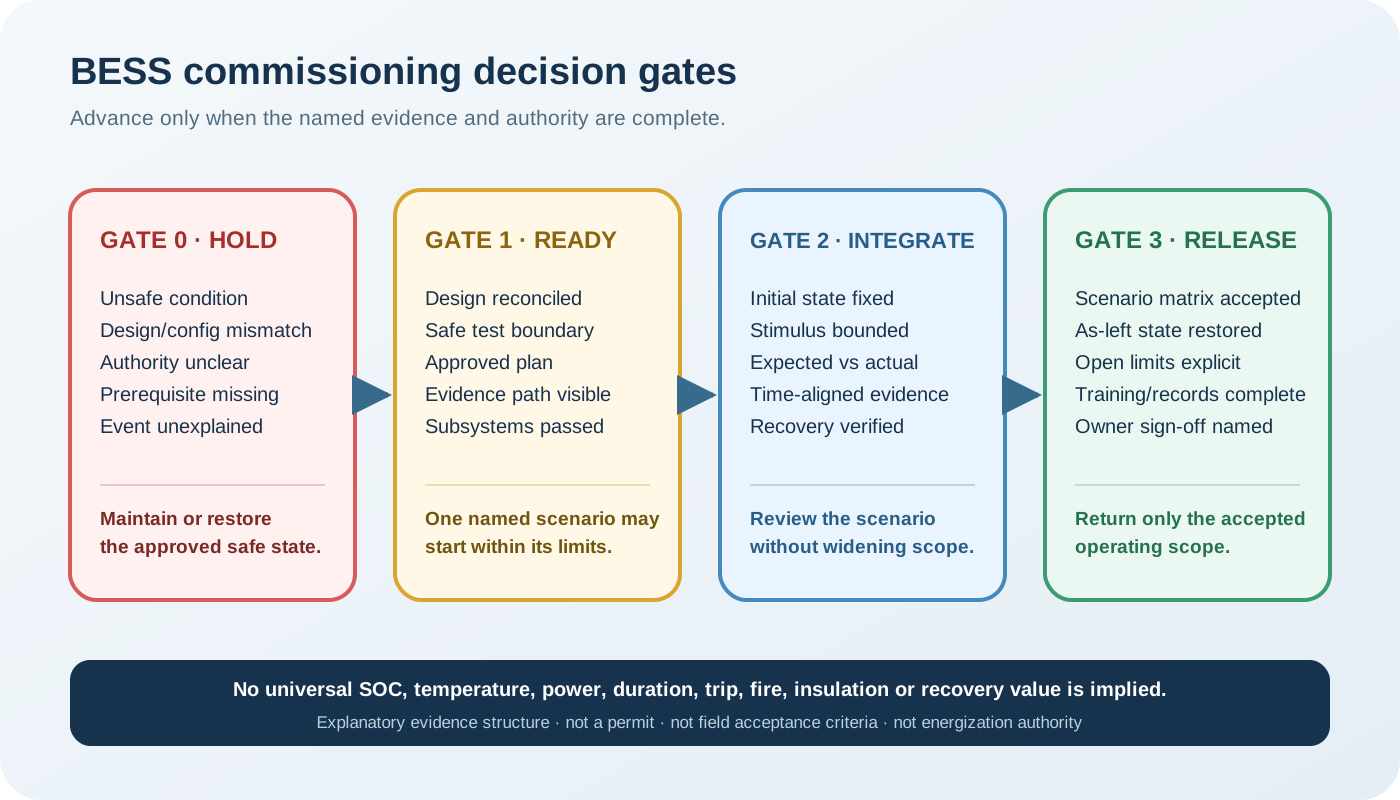
| Gate | Required evidence | Result |
|---|---|---|
| Hold | Unsafe condition, design/configuration mismatch, unclear authority, missing prerequisite or unexplained event. | Maintain or restore safe state; do not begin or continue the scenario. |
| Ready | Reconciled design/as-built/configuration, safe test boundary, approved plan, calibrated evidence path and passed subsystem prerequisites. | One named scenario may proceed under its approved conditions. |
| Integrated test | Initial state, stimulus, expected/actual response, synchronized evidence, stop/rollback and verified recovery. | Review the scenario without expanding its scope. |
| Release | Accepted scenario matrix, restored/as-left configuration, open-item limits, training, records and named owner approval. | Return only the documented operating scope. |
SIX-STEP COMMISSIONING PROCEDURE
Run a bounded scenario, then prove the way back.
- Fix the system boundary and authorities.
Name the grid/PCC, transformer and switchgear, PCS, battery/BMS, EMS/SCADA, auxiliary/HVAC, fire and communications boundaries and the authority for each gate.
- Reconcile approved design, as-built identity and active configuration.
Record revisions, serials, firmware, settings, point maps, protection values, temporary changes and unresolved mismatches.
- Prove safe test readiness.
Confirm energy control, permits, emergency response, exclusion zones, calibrated instruments, communications, initial state, witnesses, stop criteria and rollback.
- Verify subsystem prerequisites.
Review approved evidence for battery/BMS, PCS, protection, EMS/SCADA, HVAC, fire, auxiliary power and communications before combining them.
- Execute one integrated scenario at a time.
Use an approved matrix for applicable normal, loss, alarm, trip, shutdown and recovery states. Record expected and actual sequence without inventing universal values.
- Recover, reconcile and hand over.
Demonstrate approved rollback/recovery, explain gaps and deviations, restore the accepted configuration, preserve raw records and transfer the as-left package with limitations and sign-off.
EXPERT REVIEW
Questions before a scenario result becomes release evidence
- Does equipment identity and installed topology match the approved design and certification scope?
- Are subsystem results current, traceable and valid for the integrated configuration?
- Does each scenario define initial state, stimulus, expected response, stop, rollback, witness and evidence?
- Are protection, BMS, PCS, EMS/SCADA, auxiliary, HVAC and fire responses visible on a synchronized timeline?
- Does recovery prove the intended safe or operating state instead of only clearing an alarm?
- Are bypasses, temporary settings, punch-list items, training, warranties and restrictions explicit?
AS-LEFT HANDOVER
Transfer the state that actually exists—not only the design that was intended.
Approved and as-left drawings, asset/firmware/settings/point-map inventory and signed change record.
Installation, pre-energization, permit, energy-control, emergency-response and instrument records.
Subsystem packages, scenario matrix, alarms, SOE/events, trends, physical indications and witness notes.
Stop/rollback/recovery evidence, open items, limits, training, OEM/warranty actions and named acceptance.
The PDF preserves the gates, collection table, six-step procedure, handover package, sources and application limits.
OFFICIAL PRIMARY SOURCES
Use each source only within its published scope and jurisdiction.
- IEC 62933-5-1:2024 — safety considerations, hazard identification, risk assessment and mitigation for grid-integrated EES systems
- IEC 62933-2-1:2017 — EES system unit parameters and testing methods
- U.S. DOE FEMP — customizable lithium-ion BESS technical specifications and procurement checklist
- UL Solutions — UL 9540 ESS testing and certification scope
- NFPA 855:2026 — U.S. stationary ESS installation standard
- OSHA 29 CFR 1910.333 — U.S. electrical work practices, de-energization, verification and re-energization
IEC publications provide international system-level structures. DOE FEMP, NFPA, UL and OSHA sources describe United States procurement, code, certification or workplace scopes. They do not create one universal commissioning value. Confirm the country, AHJ, utility/grid code, fire and building requirements, site permits, exact OEM instructions, certification scope, qualified-person requirements and responsible engineering/operations authority before testing or energization.
RELATED SCOPE